Budgeting for students who never came back
The budget assumed most of the roughly 750 students lost during the pandemic would return. They did not. The year ended in the red, and the difference came out of savings.
Tigard-Tualatin School Board, Position 4 · Election May 18, 2027
My name is Steven C. Burke. I raised two kids in Tigard-Tualatin schools. I know the district as a parent, as a volunteer, and as a teacher. I have practiced law for 23 years, and I am running for school board because our district has spent its savings for six years in a row and is now closing a school to cover a fraction of the gap. The school funding crisis should have been avoided because all of the signs were obvious. We need better leadership and communication on our Board.
Every number on this page comes from the district's own budgets, audits, and meeting minutes. Follow the road and decide for yourself.
The status quo, in four numbers
General Fund deficits in every year from 2021-22 through the 2026-27 budget.
Drawn from reserves. From $34.4M at the start of 2021-22 to a budgeted $11.6M.
Reserves as a share of revenue in this year's budget. Board policy requires 12%.
Credit downgrades. Moody's in October 2024, S&P in July 2025.
Revenue did not fall. General Fund revenue rose every year, about 20 percent from 2021-22 to 2025-26. Spending rose faster while enrollment dropped from 12,890 students in 2017 to a projected 10,406 this year.
The board's own policy says to keep 12 percent in reserve. The district crossed below that line in 2023-24 and has kept going. Without further cuts, the district's budget message says reserves fall to 2.1 percent in 2027-28.
The roadmap
The budget assumed most of the roughly 750 students lost during the pandemic would return. They did not. The year ended in the red, and the difference came out of savings.
At the May 25 budget committee meeting, the district's CFO acknowledged a "cliff" when one-time federal money ended and confirmed the district was one biennium away from cuts. The budget message itself forecast a $14.4M deficit for the following year.
The 2022-23 budget passed the committee 9 to 0. It made no reductions and added 17.5 positions paid for with one-time and grant money. A committee member asked why temporary dollars were funding permanent staff.
The budget counted on 238 students returning. Actual enrollment was 11,325, below even the demographer's low projection of 11,488. The year closed with the largest deficit in this record.
The first reductions arrived: $9.0M and 67 positions. Then 58.5 positions were added back mid-year. The same thing happened in 2022-23 (28.7 added) and 2024-25 (15.0 added). The district's own financial plan says the main reason for the deficit is that it "maintained and even increased staffing levels" while losing 1,100 students.
Voters funded Art Rutkin Elementary in 2016, before the pandemic. The board opened it in fall 2023, after enrollment had already dropped by more than 1,000 students, with new staff and about $1M in startup cost. It has room for 625 students. This November it enrolls 419.
Moody's downgraded the district and assigned a negative outlook, citing its use of reserves and declining enrollment. In July 2025, S&P followed, citing consecutive operating deficits, use of reserves, and declining enrollment.
The 5 percent sustainability reserve was spent, making this the first budget without one. Another $10.6M and 80.5 positions were cut. In April 2026 the board cut 21 more positions and raised class ratios in grades 3 through 5.
The district presented one option and no alternatives. Its report estimates about $1.1M a year in savings and cautions that these are "not all guaranteed." The full demographer report behind the decision is not yet public, and the district's five-year forecast does not include any closure savings.
The district's forecast requires about $10M more in reductions for 2027-28, driven largely by rising pension rates. A school closure that starts in 2028-29 does not touch that number.
Position 4 is on the ballot. The same board that drove this road is asking to keep driving. You can choose a different route.
The proposed fix
The closure takes effect in 2028-29, and the building then serves as temporary space for other schools through 2029-30. The district plans to keep owning it.
The board points to about $26M in reductions since 2023-24, and to a 2024-25 deficit of only about $260,000 after a mid-year spending freeze. Both are true.
The warning came in May 2022. The first cuts came a year later, and reserves were already below policy by 2024. Acting late meant deeper cuts, two downgrades, and no cushion left for the families now facing a closure.
A different route
When the forecast shows a deficit, the public hears it that year, in plain language, with the plan to close it.
No closure or layoff vote without side-by-side options and the data behind them, published before the decision.
Special education and mental health services stay off the cutting table.
Check the work
Qualifications
School board members do two jobs. They set direction for what happens in classrooms, and they are the public's check on a budget of more than $180 million a year. I have done the work on both sides of that.
I spent two decades as a civil trial lawyer, reading financial records and asking hard questions of people who would have preferred I didn't. Then I went back to school, earned a teaching degree, and taught grades 6 through 12 here in Tigard-Tualatin.
My roots are local. I graduated from Benson Polytechnic High School, earned my history degree at Portland State University, and went to law school at Lewis & Clark. I live in Tigard.
I know this district as a parent too. I raised two kids who attended Tigard-Tualatin schools, including a neurodiverse child. In both my personal and professional life, I have extensive experience working with people with special needs.
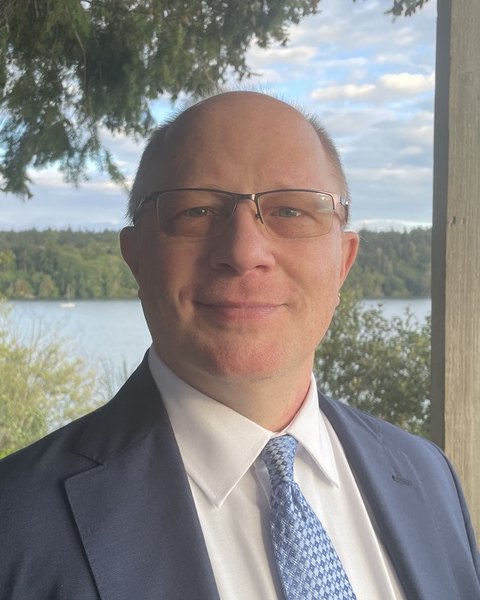
Teaching in TTSD, grades 6 through 12, in a special education program for students with mental health issues.
Legal experience advising Oregonians on important legal issues over 600+ cases and through 54 trials.
Master of Arts in Teaching, George Fox University, 2022.
Volunteer public service on boards, committees, and in youth court.
Including a neurodiverse child. I have sat on the family side of the table and know what it takes to get a student the support they need.
In my personal life and in my professional life.
Attorney · Former TTSD teacher · Community volunteer · Tigard, Oregon
Third generation Portlander and longtime Tigard resident with a career spanning the courtroom, the classroom, and community boards. Practiced civil law in Oregon and Washington for more than two decades, serving as lead counsel in over 600 cases and 54 trials, then earned a Master of Arts in Teaching and spent two years teaching grades 6 through 12 in a Tigard-Tualatin School District day treatment program. Has served as a charter school director, a nonprofit board president, a youth court judge, and an elected member of the Oregon State Bar House of Delegates. Brings a working knowledge of public budgets, governance, employment law, and the day to day realities of teaching to the service of Tigard-Tualatin students and families.
Special education program for students with mental health issues, Tigard; grades 6 through 12
Portland metro area
Law firms and a solo practice in Tigard and Portland
Civic education programming in Oregon secondary schools
Secretary 2008 to 2009; President 2011
Chaired the User Guide Subcommittee
4.0 GPA; Oregon teaching license with Social Studies endorsement
Graduated with Honors; Moot Court Honor Board
Married to author Darcy Burke; father of two adult children. Guitarist who performs at community events, amateur astronomer and astrophotographer, and voice actor.
Why I'm running
I taught in this district. I know what it looks like from inside a classroom when a budget decision made downtown arrives without warning and without explanation. I also know how to read a budget, and when I read ours, I found a board that was told what was coming and chose to wait.
In May 2022 the district's own finance chief told the budget committee that a cliff was ahead when federal relief money ran out. Enrollment was already falling. The board passed a budget with no reductions and new hiring on temporary money. It then spent down its savings year after year, and only started cutting once the cushion was gone.
The result is what families and staff are living with now: layoffs announced in spring and partly reversed by fall, a school named for closure with a single option on the table, and a reserve at about half of what board policy requires. I believe the board failed in its financial stewardship, and I believe the people it serves were the last to be told.
Closures and layoffs are announced before plans are final and before alternatives have been shown to the public. People learn what is happening to their school from a press release.
Budget after budget passes unanimously. A board that always agrees with itself is not testing its own decisions. Real dialogue is worth more than the appearance of unity.
Forecasts missed, a new school opened into falling enrollment, and reserves ran down. Trust starts with saying plainly what went wrong.
My commitments
I will tell the public what it needs to know, good or bad, and as soon as possible. And I will listen to what you have to tell me, every time.
Before any closure or layoff vote, the public sees the options considered, the savings of each, and the data behind them.
I oppose closing Alberta Rider on the case made so far. About $1.1M a year against a $10M problem, one option presented, and a demographer report the public has not seen.
I will not vote to cut special education or mental health services. I raised a neurodiverse child in these schools and have worked with people with special needs throughout my personal and professional life. I know what those services mean to a family.
I want teachers directly involved in making decisions, not just told about them ahead of time. The people who do the work should help shape the choices that affect their classrooms.
The reserve policy says 12 percent. I will ask for a public plan to get back to it.
Host a coffee, put up a sign, or tell me what you are seeing at your school. Contact: [email protected]
Donate
Online giving for the campaign is being set up. This page will open for contributions as soon as it is ready.
Thank you for wanting to help. Please check back shortly.
Send the roadmap on the home page to a neighbor. Every number on it comes from the district's own documents.
Invite a few neighbors or colleagues for coffee and I will come answer questions.
Parents, teachers, and staff know these schools best. Contact: [email protected]